

I'm Training for Aesthetics — and You Don't Know What That Means
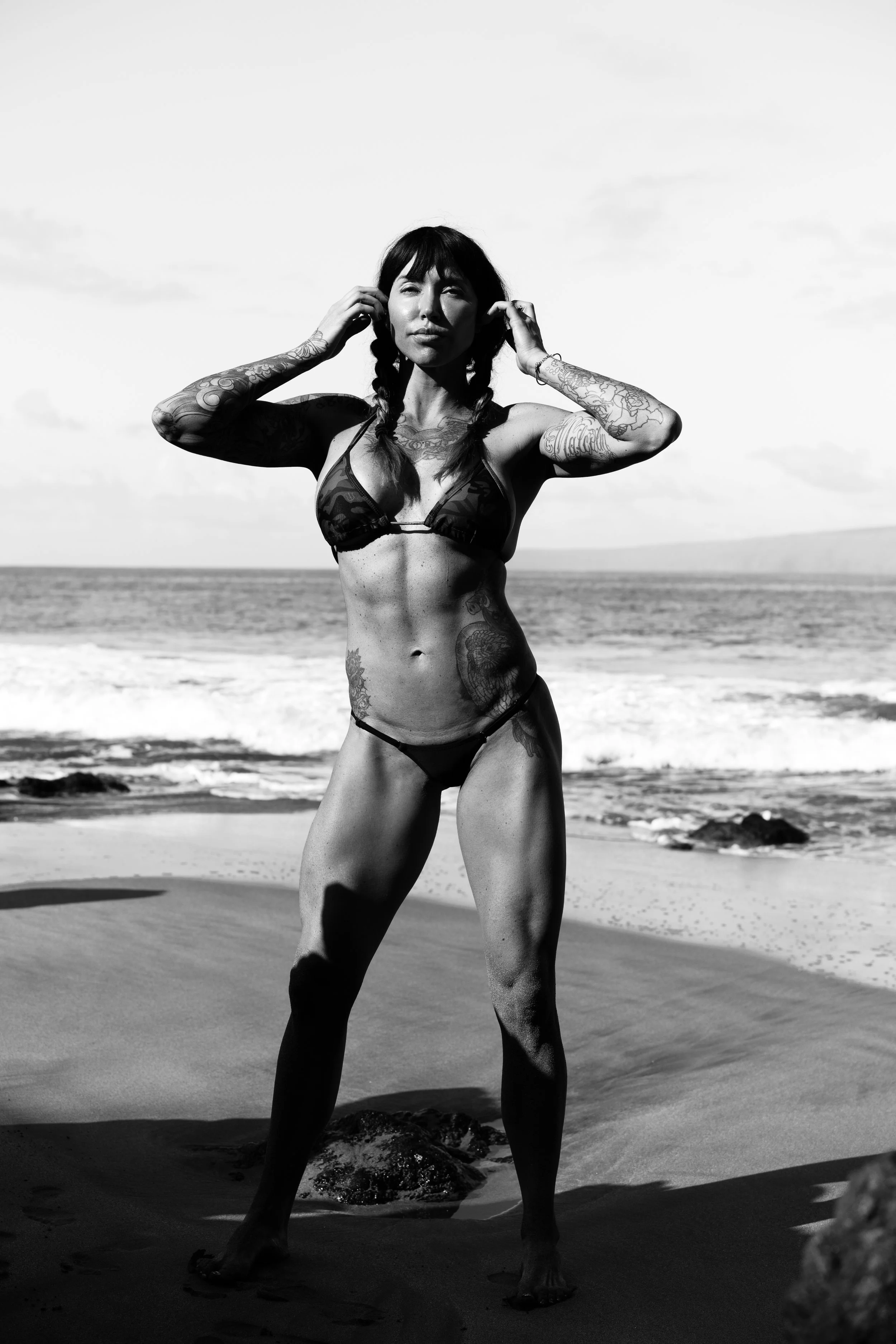
A few weeks ago someone told me they were training for aesthetics, and I could hear the apology in his voice. He said it the way people say things they've rehearsed being judged for—half a step ahead of the criticism.
Training for aesthetics, in 2026, assumes a preoccupation with vanity or self-indulgence. It's a weird paradox in that most of us care very deeply about how we are portrayed in the eyes of others, but to admit to actively wanting to enhance your looks is akin to seeking money; it presumes an ambition of excess. So most people hide their desire. Training for anything else — performance, longevity, "functionality," whatever dignified cause the culture is handing out this month — signals something more serious. More genuine. But almost all try to catch the reflection of our aesthetic when we pass a mirror, we can't hide the desire from ourselves. And what could be less genuine than denying what we really desire.
I believe this confusion comes from a simple misunderstanding of a word. The original definition of aesthetics. The reversal is almost perfect. How we use the word is etymologically and physiologically wrong.
Aesthetics comes from the Greek aisthētikos. It does not mean appearance. It means sensation. Perception. The embodied, nervous-system capacity to feel. An aesthete, in the original use, was not a narcissist — it was someone whose sensory apparatus was alive. Someone who could feel a room when they walked into it. Feel the difference between a movement that was sincere and a movement that was performed. It was someone who could perceive themselves without a mirror because their nervous system was one. Perhaps our reflection in a mirror has made us numb.
The opposite of aisthētikos is anaesthetic. Without feeling. Numbed. Shut down.
Every person that walks out of a gym having gone through the motions — sets logged, reps counted, boxes checked — and they can't say what any of it felt like, missed training the most important feature of fitness. The part that connects that overthinking brain to that underfelt body.
This is most people.
The purest expression of anaesthetic culture right now is looksmaxxing.
If you don't know the term: it's the project of optimizing male appearance through jaw training, mewing, hairline interventions, skincare, steroids, surgery, and a hypertrophy protocol narrowly aimed at whatever photographs best on the front-facing camera. Aesthetics marketed as discipline. By its own claim, the most serious version of training-for-looks currently available.
It's the most developed anaesthetic athlete in the modern fitness landscape. He has trained, sometimes for years, with the sensory apparatus of his own body switched off. He cannot tell whether a movement is true or rehearsed because the only feedback loop he's running is whether the movement registers on an audience.
The whole project is an attempt to become visible to yourself through other people's eyes. Trying to feel yourself by being looked at. Dissociation dressed as self-improvement.
It does not produce what it promises. The looksmaxxing physique is recognizable once you know what to look for: lighting-dependent, compressed range of motion, tissue that is more inflamed than alive, posture that photographs well and moves badly. They hit the look for a photograph. They cannot hold it in motion, under load, through years, in a body they have to live inside.
You can't get the aesthetic outcome through anaesthetic training. The two are, definitionally, opposed. The industry sells you the opposite claim every day, and the most disciplined version of that claim is also the most visible proof that it fails.
Sensation is a by-product of attention. It is generated internally, and cannot be given to you or sold. You can't package the felt.
What the industry can sell is numbers. A weight on a bar. A "science-backed" program, where someone who has never seen you tells you they can. It's time on a clock. A photo taken in the same light, same pose, eight weeks apart. These things are measurable. Marketable. They can be sold back to you next quarter when they stop hitting.
The trade is rarely named: measurable outcomes in exchange for your capacity to feel what you're doing. You get a number. You lose the body the number came out of.
The numbers themselves aren't the problem. Heavy squats are fine. Running times are fine. Progressive overload is fine. The problem is orientation. When the number is the point, sensation becomes noise. When sensation is the point, the number becomes a byproduct. Same movement, same weight, completely different training.
It's easy to poke fun at muscular men prancing around on stage in sequined briefs looking very serious in their adult pageant. But most sports also numb their athletes.
They stay so focused on the numbers on a bar or the weight on a scale that almost every single one of them forgets what it's like to feel, let alone feel good. This is the mistake of a culture detached from effort outside of sports. We glamorize the hardship and we make memes out of suffering. We like and share motivational slogans that romanticize the concept of turning it all off and ignoring pain, celebrating those that can run 100 miles or lift 1000lbs by not feeling.
These same people look down on aesthetic training as a superficial pastime rooted in narcissism, but they are the same format on different mediums.
Muscle isn't just force-producing tissue. Skeletal muscle, in aggregate, is the second-largest sensory organ in the body — behind only the skin. Woven through with proprioceptors, mechanoreceptors, Golgi tendon organs, muscle spindles, and free nerve endings feeding a continuous, high-bandwidth stream back to the central nervous system about how much force you're producing, where tension is accumulating, where it's leaking, what's loaded, what's threatened, what's safe.
This stream is proprioception — the sense of self-in-space — and it's one of the most fundamental perceptual capacities you have. You use it to stand up. To walk without looking at your feet. To catch yourself when you trip. To know, without looking, where your left hand is right now. It also happens to be at the center of how you see yourself.
Lean tissue is not all created equal. Packing on size for size sake says nothing about the quality. Because as far as muscle is concerned, what gets bigger does not always get better. More lean, well-conditioned muscle means more sensory bandwidth when it is trained to do so. Better-developed muscle means richer, higher-resolution feedback. A body with dense, healthy, varied lean tissue isn't just stronger — it's more sensorily intelligent. More to feel with. Finer distinctions available. Subtler shifts in load, position, and fatigue become readable.
This is the argument for building muscle the industry has never made, because the industry has no language for it. But it's the actual reason I train for lean tissue. Not because I want to look a certain way — though I will, and I'm not shy about that. I train for lean tissue because muscle is a sensory organ and I want more of it. Richer proprioception. Finer feedback. A nervous system with more to read from. Literally: more body to feel with. It just so happens that in building to feel better, you can also change your looks.
It pays tribute to one profound concept: if how something looks changes how you feel, it means you can change how you feel and that will change how you look. But when you change how you look without changing how you feel, nothing changes.
This is the mistake the fitness industry sells to a culture demanding instant gratification. 6-week transformations, periodicals with explicit instructions on how to "pack on pounds of muscle in weeks". Nowhere out there are we compelled to consider the slow methodical growth and focused development of lean mass as a way to change how we feel, which includes the confidence that changes how we see ourselves.
Sensation is the hardest attribute to develop because our society has put the most value into avoiding discomfort.
Misread this and you'll think I'm describing the soft end of the industry — yoga mat, breathwork, mushroom coffee, "self-love". That's the other side of the same anaesthetic coin. It produces a body that's never actually challenged, never actually changes, and never develops the interior resolution that real sensation-based training requires.
What I'm describing is closer to the opposite. Sensation-based training means you can't lie to yourself anymore. You can perform a movement you can't feel. You cannot feel a movement you're merely performing. Different modes, different bodies. When sensation is the organizing principle, every movement has to register — right tissue, right speed, right position — or it didn't count. Not because a coach says so. Because you can feel it didn't.
This is the whole premise of The Quest for the Hyper Trophy, to develop an ability to feel. Growth, leanness, better performance, looks, these are by products of training for aesthetics.
We do this by exploring sensation. We aren't concerned with what the "best exercises" to grow your shoulders are, we want to know where our shoulders feel a lack of confidence under tension, and we focus on that until the feeling is integrated into daily existence. We explore our own individual ranges and challenge them appropriately. This means exposing yourself to a wide variety of discomforting sensations.
The inconvenient truth is that what looksmaxxing seeks, and what most athletic endeavors will never uncover is that each and every human should be focused on aesthetics first—under its original meaning. That the pursuit of sensation and perception from the inside out allows for all other tasks.
A body trained with attention, under varied load, across the full range of the joints that actually exist, with sensation as the metric and rep count as the footnote, produces a specific visual outcome. Lean without being stripped. Dense without being inflamed. Proportioned the way a body is meant to be proportioned, because the training addressed the whole organism instead of narrowing to whatever photographs best. It moves the way a body that's been lived in moves, which is different from a body that's been puppeted, and anyone with eyes can tell the difference even if they can't articulate it.
The traditional aesthetics protocol — which looksmaxxing has merely co opted, poorly — is high-volume hypertrophy through accommodated patterns, same rep schemes, for months, with zero attention paid to what any of it feels like. It produces a tight, inflamed, joint-compromised, often visibly asymmetrical physique that depends on lighting and posing to read well. It does not age. The first time life demands something off the program card, it gets punished hard.
A body developed through sensation-based work looks similar from the outside — lifting weights, moving, sweating — but the person inside is doing something fundamentally different. The outcome shows up differently too. More beautiful in the way things are beautiful when they've been made carefully rather than produced quickly.
If you accept the argument — sensation is the point, numbers are the footnote, the look is downstream of attention, muscle is a sense organ — a few things change immediately.
You stop training patterns you can't feel, even if you're "strong" in them. Being strong in a movement you can't perceive isn't strength. It's habituated output. It doesn't transfer, doesn't protect you, and doesn't age well. You break the pattern down, you find the real limitation and you focus on feeling and nurturing it until sensation becomes available again. It's humbling work.
You stop trusting programs that tell you what to do without teaching you how to feel what you're doing. Most programs fail this test. Most coaches fail this test — they can give you sets and reps and tempo, but they can't tell you what to pay attention to, because they've never developed the capacity themselves.
You stop measuring sessions by what you output and start measuring them by what you registered. A hard session where you were absent is worse than an easier one where you were fully awake. This is almost the exact inverse of how most people evaluate their training. It's also the truth.
I train for aesthetics. Not because I want to be looked at. Because I want to be awake inside and able to look out of the only instrument I'll ever have.
The alternative — the anaesthetized body, the looksmaxxed cage, the numb athlete going through programmed stimulus for years and never once checking whether anything registered — is the most common training outcome in the world right now. It's a slow, polite disaster. Decades of people who "worked out" without ever inhabiting the body they were working on.
Training for sensation doesn't require special equipment, elite genetics, or a specific starting point. It requires the decision to stop performing and start feeling. Everything else flows from that.
The body that comes out of it, eventually, is the aesthetic body — in both senses. Felt from the inside. Visible from the outside. Made carefully. Built to last.
That's what aisthētikos means.
The better way to understand is to feel what I mean. You can access the first 2-weeks of The Quest Part II here:
