

Writing Friction
Is writing dead?
TLDR; I don’t think it is. But people are not reading the way they once were. Words, it seems, are losing their impact.
I question whether it’s the drop in collective attention span, or people’s disbelief in the “author”—a recognition that we are no longer in the Information Age, but instead, an age of generative AI Slop.
I’ve been writing more than I ever have, and I am enjoying it more than I ever have. I also recognize fewer are reading what I put out—to say I don’t notice, or that I haven’t felt the rug pulled a bit would be dishonest. Admittedly, I have not been good at conforming to “the formula” of a hook and controversial sub title, or appealing to the latest drama. Instead, I try to write what I would like to read. I deplore sensationalism, and although it took me a while to realize, my “hot takes” about current affairs are a symptom of my lack of attention, that point out an inability to render wisdom before I’ve truly formed an idea.
When I look around, most of what is being opined will not be relevant in a month, let alone ten years. And this is what I have learned to base my writing on: a long timeline. If what I write is embarrassing to reread in a year, I didn’t spend enough time thinking it through or constructing it, or the topic was not worth the words. However, If I don’t see serious corrections reading a piece from over 5 years ago, I probably have not developed very much in that time as a writer. Progress in writing is seeded by discontent.
Of my written volume I only share a small percentage, and even this is too much, I think. Because good writing is not about the production of words but the refinement of ideas. And I would hate to say this to any poor soul still reading this, but this isn’t for you. Writing helps me organize my thoughts—of which I have way too many—most of which aren’t worth repeating. It’s a way to argue with myself, or curate an idea that I can’t quite articulate in conversation. That being said, a great writing project usually starts as a conversation and needs more service than what our lips can pay. A pen picks up where the vocal chords fall short. I notice a gap in an idea and I don’t like the feeling of losing continuity. So I sit and fill that space with words. I rearrange those words like a jigsaw puzzle that I’ve never seen the completed state of, wondering, “does this make sense?”
In this sense, writing has little to do with words. It is simply the process of refinement. Forming sentences is no different than picking up a heavy object, or attempting to grapple with another human. We are categorically “messy”, and organization is paid for in discomfort and pain. Like any reward, its value is derived by its cost. When another “generates” instead of creates, I feel sorry for them; they are not cheating, they are missing the treasure for the chest.
My favorite parts of writing are the profound moments of epiphany, like when a piece just fits. Like your idea was always correct, it just needed to be turned over. However, this is only possible when it is preceded by my least favorite part of writing, staring at the cursor, waiting for a single word to manifest. The feeling of laborious eternity for a single sentence. The sensation of uncertainty that I even comprehend the language I’m trying to express myself in. And then there is the “chatter”, the voice of insecurity that gets you to wonder if any of this matters. You can suddenly hear “them” all, your imaginative enemies and real, perceived as laughing as they scan your paragraphs for mistakes. All of this forces you to weigh and measure time spent looking at a blank page and turns you into a pragmatist of productivity. Thinking of all the “things” that necessitate attention, the dishes, the laundry, even getting an early crack on tax filings begin to look appealing. And this is why few write, that is until it seems like Ai might have unburdened our pain.
We have forgotten that some things are only valuable because they are difficult; that the friction of the mind is no different than the friction of the skin against a barbell or a gi. If it doesn’t cost you something—in time, in focus, or in sanity—it probably isn't yours. Unburdening the pain is what kills the result.
I have dabbled quite a bit with AI. I’ve used it to edit, argue, criticize, and even built an LLM based on my own writing for reference. But I have never used it to generate an idea or to do the writing for me. I recently received a slightly humorous and halfway worrying reply to one of my emails, someone asked—I assume not in jest—whether I was “using AI to write my copy”. I laughed, because I felt insulted, but then I think I understood the comment for what it was; not a question on my writing but of all writing. Can we tell anymore, what’s real and what is generated? I certainly hope I can still use an M dash—as it splits an idea and reflects the order from disarray—without being accused of needing an algorithm to form my grammar. I hear too many analogies are a dead give away. That AI can’t help but make a consistent pattern of subject-verb-object. I’ve noticed a proliferation of 3 bullet pointed ideas within my spam emails, and of course, there are the mistakes.
Should I leave a typo to prove my humanity? Is error the new CAPTCHA? How can you tell a fabricated idea from a machine-enhanced one? Do we only care about what is real because we assume our conscious reality is? If you read something, and it affects you, does it matter who wrote it, or even if it was from a person?
I think, like most things, it comes down to a feeling. When another is able to capture a sensation, and it sparks the familiar, we can see ourselves in the words and in the writer. This is called 'sympathy'—literally a 'feeling together'—which functions as a hidden tether connecting us at a distance, allowing our nervous systems to respond to a world we are not currently touching. But now, like so many other words, it has flattened into meaning: feeling sorry for someone. Aside from pity, many of us can’t feel. We have become numb to the volume of “things” trying to connect to us (by “connect” I mean consume). Or, we have outsourced our feelings to Fitbits, heart rate monitors, apps, and even other humans. Perhaps you were hoping that reading this would help you feel a certain way about the topic. Are we really concerned about an uncanny valley, where the line between us and machines can no longer be identified? Or are we just bitter that we can’t bust another angry commenter for using the wrong “their”?
No matter your take on digital slop as the promised utopia or an abysmal reality, it is hard to make it about a line of honesty like we want to. Because writing is inherently untruthful. It is not organic and natural, it is a process of slowly rearranging words on a page to affect another person—and hopefully ourselves. The honest part is not the words or what you tink of the author, but the work that was done to create it. It’s a painstaking process to make others believe that our ideas come naturally, we communicate with ease and jest, and that we never, ever, ask Google for another word that means “jest” because you can’t use that three times in the same piece and have people not notice.
The act of writing is ironically the opposite of what we are trying to do with it, connect at a distance. You often can only write well when secluded, removed from others, and have a cornucopia of stimulants, lack of distraction, and yearning desire for others to think of you how you think of you. Admittedly, I also usually write best when angry, melancholic, or self-destructive. All properties that I attribute to my disappointment with people. And although it serves as the fuel, writing and reading others brings me back from begrudging society.
It surprises me that I have never considered myself a writer, no more than I refer to myself as a musician or an athlete, especially after I account for all the time I spend doing it. I would call it humility but it’s not, it’s my way of protecting against criticism, by separating it from my identity. But after being accused of using AI to generate my words, and in a similar timeframe also having an ex-business partner fraudulently copyright my words, I think I will start to own the fact that I am a writer. Because as words lose their effect on consumers, they become more useful for the creator. An internal focus as opposed to external validation. As this is what they were always intended for.
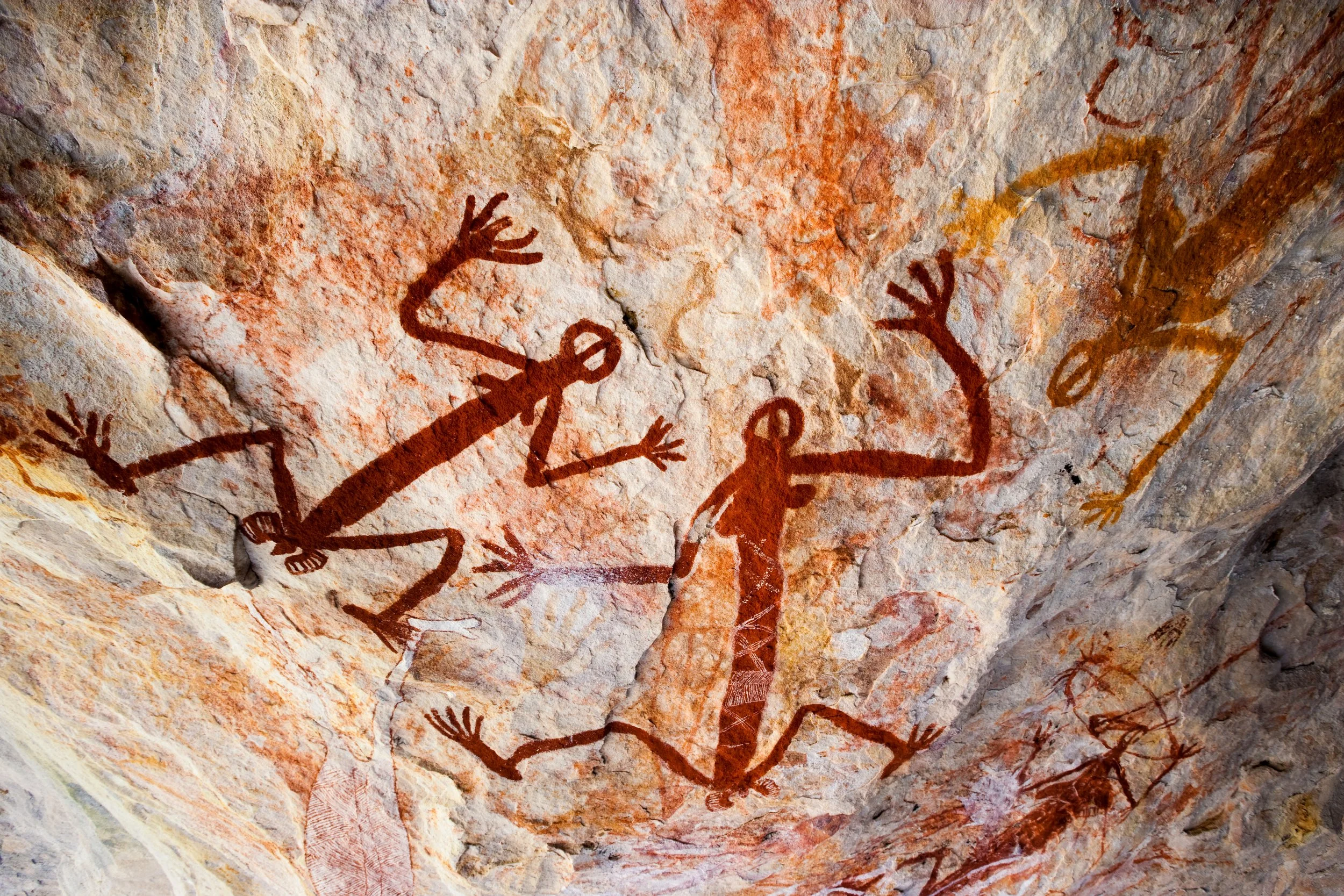
I don’t question whether writing is dead—to me, it never will be—because it is one of the few acts that remind me that I am alive. In a world of infinite, frictionless noise, a human voice is a handprint on a cave wall. It’s messy, imperfect proof that someone was here, they struggled, and they had something to say that a prompt could never capture.
That, and I also quite like the idea of leaving the reader with a question about how much of this was written by me…
