

The Age of Fragility
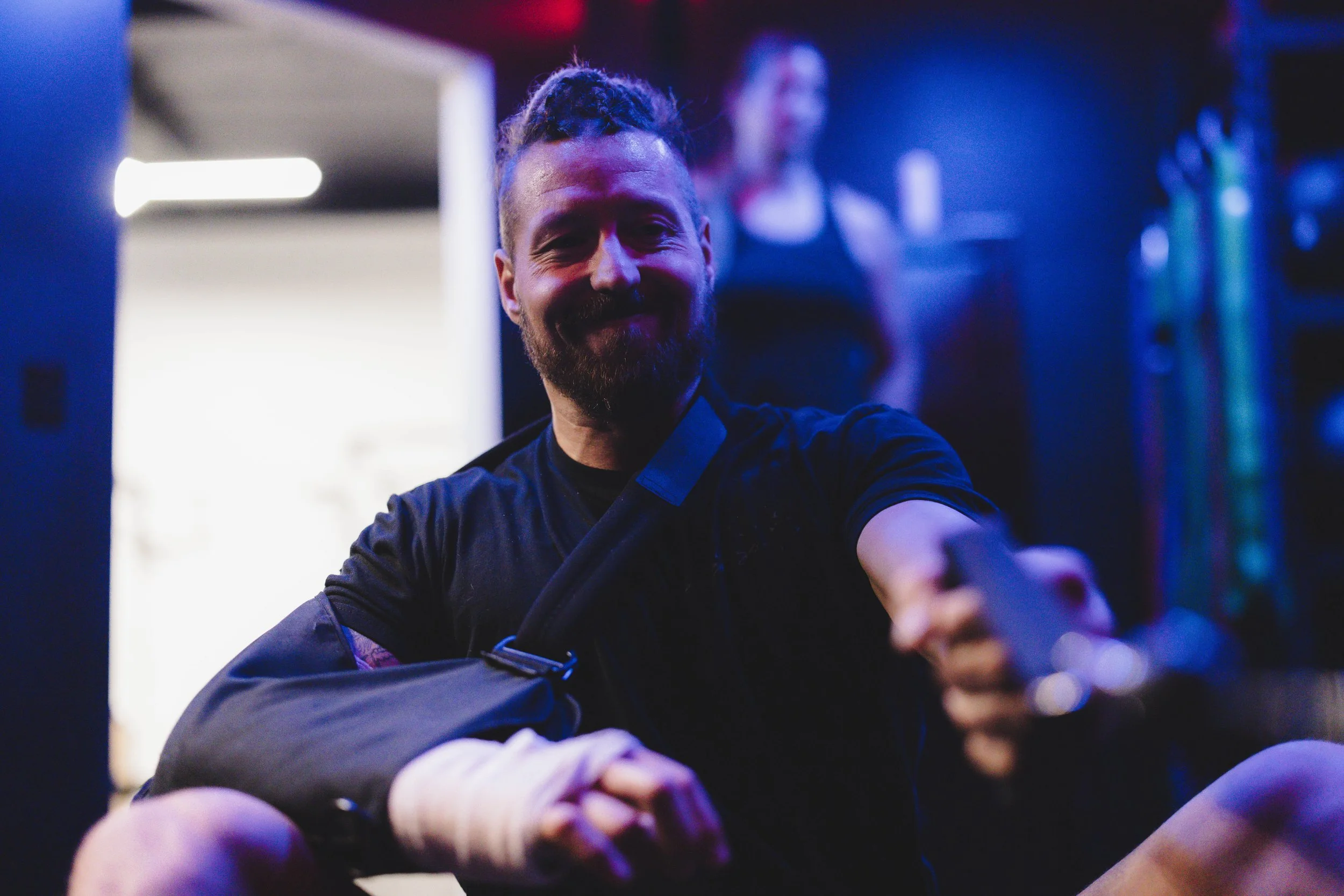
The biomechanics of human movement is mostly bullshit. That might sound like heresy if you’ve spent years paying specialists to analyze your gait or "correct" your pelvic tilt, but the reality is that the body is not a ’67 Mustang. We’ve been sold a story that if the body squeaks, we just need to find the loose bolt and tighten it. We are told that perfect movement—dictated by the cold physics of leverage and an ideal sequence of muscle firing—is the only thing standing between us and total physical collapse. It is a seductive idea because it suggests control, but it is a total and utter lie. As it turns out, we are not all going to perish because of gluteal amnesia.
The fundamental flaw in how we treat injury is the belief that if you have pain, there must be a knowable and direct physical cause. We obsess over MRIs and scans, searching for a smoking gun in the discs or the joints. Yet back pain mysteriously appears and disappears regardless of what a scan shows. We are inundated with well-intentioned generic prescriptions for exact exercises to treat non-specific pain. When we convince ourselves that we know the exact mechanical "reason" for our pain, we actually limit our ability to understand the true circumstances that drive it. We aren't just treating tissue; we are treating our tissue’s reaction to stress. Pain isn’t a simple physical problem. It is a complex, physio-psycho-emotional condition. I don’t mean any disrespect, but we are currently in the "reading tea leaves" era of physiology. The reality is that we just don’t know how much we don’t know, and it shouldn’t surprise us how our impossibly bad ideas spread and linger.
Think of the "Shoe Bomb" of 2001. A single, failed attempt by one individual led to a permanent, global shift in how we travel. Decades later, millions of people are still removing their shoes at the airport every single day. Everyone agrees it is a bit ridiculous, yet the protocol remains. This was the metaphor given by Todd Hargrove, and since I heard it, I can’t stop laughing at my own "tweaks." Chronic pain is that same security protocol stuck in a permanent alarm phase. You might have had a minor tweak years ago, but your neuroimmune system—the "TSA" of your body—decided that the threat level is forever Red. Now, your system triggers a psycho-emotional response every time you bend over to, funnily enough, take off your shoes.
John Sarno was perhaps the original disruptor of this myth. Long before we had fancy imaging of neuroimmune crosstalk, he observed that his patients’ back pain had almost nothing to do with the structural "abnormalities" showing up on their X-rays. He realized the body was often using physical pain as a diversionary tactic. By creating a loud, terrifying physical signal in the lower back or neck, the brain could successfully distract the individual from deep-seated psychological tension. He called it Tension Myositis Syndrome. While the medical establishment rolled their eyes, they haven’t come up with anything better than "stay in a neutral spine or die!"
What Sarno tapped into was the reality that chronic pain is rarely an acute signal of current tissue damage. Instead, it is often a manifestation of anxiety regarding future injury. We get pain because we think we might get pain. It turns out we are not only the cause of our pain but the proliferator of it. This is what researchers like Greg Lehman call Movement Pessimism. When we tell a client their glutes aren't firing or their posture is "wrong," we are essentially feeding the alarm. When we make oracle-like predictions that the "fascial lines" of an immobile hip will cause an ankle to sporadically break, we aren’t describing reality; we are priming the client for future destruction.
We have been turned into "tinkerers," people who neurotically address every minor physical detail believing that with enough finesse, a state of perfection can be achieved. But perfection never comes. Instead, that hyper-focus breeds hyper-vigilance. The more you obsess over the "physics" of your movement, the louder the pain signal becomes because your brain is now constantly scanning for danger in the very things that should be natural. If you think your back is sensitive now, do nothing but focus on it and see what happens.
This is why the "cure" often feels so counterintuitive. If the pain is driven by the fear of future injury, the only way out is to prove to the system that the future is safe. We do this by purposefully recreating the sensation and realizing that the world didn't end. We move, we load, and we explore the very positions we’ve been taught to fear.
The answer to addressing injury is likely found in the middle of two extremes. The past few decades have been based on "Correct and Protect," which has us acting like overbearing helicopter parents to our soft tissue. On the opposite side, experts like Peter O’Sullivan and Adam Meakins are leading a quiet revolution. They argue that because most injury is non-specific, the cure isn't found in correction, but in confidence. It isn’t that "Correct and Protect" is wrong—it just isn’t the final directive. Eventually, we need to embrace "Load and Adapt."
The process of healing then becomes a negotiation with your nervous system rather than a mechanical repair. Assessment is about recreation, not misalignment. You move until you find the edge where the alarm goes off. You find the sensation, acknowledge the limitations, and then learn to work around it. You find the largest, heaviest movement you can manage without triggering the alarm. Gradually, you begin to flirt with that edge. By loading the area that feels sensitive, you communicate with your body, and this builds trust. This takes longer than anyone wants, but that is the nature of trust: years of communication and intentional action, broken in an instant.
Imagine your injury is a bastard step-child. You didn’t want it, it certainly doesn’t want you, but now you are each other’s problem. Most people ignore it; they lock the injury away in a deep basement cavern of their consciousness and pray they don't hear the complaints surface. But the problem festers. By bringing the injury into the conversation, you begin to understand what it is trying to say. Whether the injury needs discipline or love can only be determined by trying to listen.
We look everywhere for an answer except from the actual part of ourselves that is screaming for attention. Biomechanics is useful, but it isn’t divination. Our entire identity can be centered on being "able," and when that gets interrupted by a tweak or a tear, our existence comes into question. There is pain in the injury, sure, but there is more pain in the change we cannot control.
It took me a very long time to comprehend that, more often than not, there was no "answer" to the cause of my pain. Realizing that allowed me to treat injury as a process of understanding. It’s like going to school—sure, it sucks, but you’ll be better because of it.
